Damsel Fly
Funnel Spider with Prey
Spider
Shield Beetle
Grasshopper
Bee Flying
Bee on Daisy
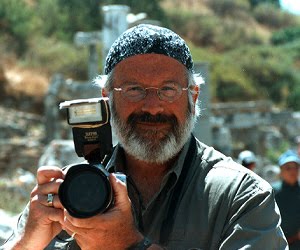
LIVE INSECT MACRO PHOTOGRAPHY BY JEFF PERKINS
If you like an adventure and you want to go to the jungle, all you have to do is go to a weeded lot in your neighborhood, or a nature preserve especially with ponds and you will find all kinds of insects that you can photograph. It really is exciting and very much like going on a safari hunt but without killing anything.
There are number of factors to consider when doing this type of photography and I will try to review the most important ones. I do not intend for this to be a comprehensive article about macro photography because there is so much information available on the Internet that is quite easy to research
I simply want to share my experience and what has worked best for me so far. Also realize that equipment, technique are always in evolution and what I say at the time of writing this article might have changed months from now.
MY CURRENT EQUIPMENT: camera is a Canon EOS M, EOS M-FD lens adapter, Canon FD Bellows, 100 and 200 mm macro lens, Canon 90 EX speed light with dedicated cable, adjustable Camera-flash bracket
EQUIPMENT: for flying insects, particularly ones that can sting you a digital SLR camera with a dedicated macro lens of at least 100 mm is advisable. You want to put some distance between the front of your lens, more importantly your face hands and body from the insect. Generally a 100 mm macro lens will put about 5 inches between the front of your lens and the subject. The 200 mm macro lens will put about 12-14 inches between the lens and your subject. You really do not want to disturb it as it will fly away and furthermore if it is a stinging insect you are at risk of getting a sting!
Another advantage is using a live view LCD viewfinder found on many modern digital SLR cameras. It also helps to get a hold of an inexpensive hood loupe to cover the viewfinder to shut out ambient light so that you can compose clearly. These plastic viewfinders also have a magnifying glass element which helps to confirm if you are in focus.
Generally most 100 mm or greater macro lenses will give you 1:1-life-size images which are necessary to bring out detail. There are some very dedicated macro lenses that go to 1:5 magnification which are fantastic for bringing out the details of insects face and so forth. They tend to be very expensive and difficult for many people to use. They do take a lot of practice.
Beside the camera and the lens, often a dedicated flash to the camera that has fast recycling time with lithium batteries is necessary. To stop motion of the insect you need to have a bit of flash which can be adjusted to mix with the ambient light so that you do not have a flash dominated photograph. Also a quality flash can fire rapidly with the shutter firing in burst mode. This helps you get better photographs with the insects flying around in particular to try to capture the insects flying off of a flower or a blade of grass.
The flash should be diffused however. I made a diffuser for my Canon EX 90 flash with a cut out piece of the plastic milk carton and taping it in the place. It works great.
A good Stroboframe bracket is essential for mounting the flash off the camera and pointing it toward the area where the lens will focus.
CAMERA SETTINGS: when you photograph close up like this you have a very narrow depth of field that may only be 1-3 mm. Therefore most macro photographers including myself find that setting the f-stop between F11 and F-22 depending on the width of the subject, the orientation of the insect and the available light is essential to get as much of the insect, especially the important parts such as the head and the antenna in focus. I set the shutter at 1/200 of a second and adjust the ISO of the camera between 800-3200 depending on the type of light that I am in. Generally the f-stop remains fixed at F11, the shutter at 1/200th of a second and therefore the adjustable third value is the ISO.
Also the flash should not be dominant. If most of your light comes from the flash the insect looks quite artificial and the background goes black. So therefore I set the flash setting down by several stops usually in the range of 1/8 down to 1/16 output to help stop action and again complement the ambient light.
FOCUSING: sometimes autofocusing is very difficult this close up. Some cameras can do it well, for example the Canon 7D with the Canon 100 mm 2.8 lens apparently does a great job autofocusing close-up. Most of the time however macro photographers use manual focus. This is done by setting the lens at its macro focal point and slowly moving in and out with your body while you're holding the camera stable until the insect comes into focus. Using burst mode will help you get a sharp shot as you slowly move in and out. This actually isn't very hard to do if your vision is halfway decent. Again by using the live viewfinder on the back of the camera it makes the job much easier.
TRIPOD: ideally a tripod would be wonderful to use but I find with these moving insects extremely difficult and cumbersome. You need to have a macro slide rail to allow the camera to be adjusted to achieve focus. I don't use one and I have learned to handhold my equipment, keep my hands very steady and control my breathing to fire a shot with minimal camera movement. At the exposure settings with flash above blurred images have not occurred.
BACKGROUND: you want to compose your shot so that the background is free of clutter. As I said, I have found that even at F11 or F-16, if the background is some distance from the insect, it goes into a nice soft blur complementing the photograph. One of the problems in using a point-and-shoot camera is that because of the lens, sensor arrangement everything is in focus and the background will compete with the insect you are trying to define.
Furthermore the light that you're in is really important. I have found photographing in harsh sunlight produces harsh photographs. I try to go out on softly overcast days when the sky acts like a giant soft box.
INSECTS BEHAVIOR: after a while you become familiar with the behavior of flying insects, I have learned to approach them slowly and avoid any rapid movements with stinging insects and to date I have not been stung. Also, early-morning when there is dew is a great time to go out and photograph the insects in the spring and early fall. Cooler temperatures slows down their metabolism and they tend to hold still much longer.
IMPORTANT OPTIONS: if you cannot afford the 100 mm-200 mm dedicated macro lens-prime lenses of course, consider a good quality close up filter on a good 50-150mm lens. These diopters have magnification from 2+to higher and are reasonable substitutes if one learns how to use them. Canon makes two lenses the 250 and 500 D and Raynox makes a decent close-up filter as well. Reversing a 50mm prime lens works well but you are close to the subject. Other options are extension tubes which will increase magnification, Bellows devices-I use an old Canon FD Bellows currently which adds a fair amount of weight but really creates tremendous magnification. Fortunately I was gifted this from two of our wonderful SPS members.
ADDITIONAL IMPORTANT HEALTH TIP: make sure you use Deepwoods off to keep ticks away. Check your skin and have a family member help check your skin afterwards to make sure you have no ticks attaching.
Enjoy, Jeff